Losing a little hair every day is normal — most people shed somewhere between 50 and 100 strands daily as part of the hair’s natural growth cycle. But when shedding becomes noticeable, whether in the shower drain, on your pillow, or in your hairbrush, it’s natural to look for natural ways to prevent hair fall before turning to medication. Do you know A wrist blood pressure monitor is a compact, portable device that measures your blood pressure at the wrist, making it convenient for home use and travel.
The good news: several natural approaches have real evidence behind them, even if none work as a quick fix. This guide walks through what actually causes hair fall, which natural remedies are worth your time, and how to combine them into a routine you can realistically stick with.
Why Hair Falls Out: Understanding the Root Causes
Before trying any remedy, it helps to understand what’s driving the hair fall in the first place — because the right natural approach depends on the cause.
Genetics and Hormones
The most common cause of progressive hair thinning is androgenetic alopecia, often called male- or female-pattern hair loss. It’s driven largely by genetics and a hormone derivative called DHT, which gradually shrinks hair follicles over time. This type tends to follow a predictable pattern (receding hairline or crown thinning in men, diffuse thinning in women) and usually requires a long-term strategy rather than a single remedy.
Stress and Lifestyle Triggers
A period of intense physical or emotional stress — illness, surgery, major life changes — can push a larger-than-normal percentage of hair follicles into a resting phase, leading to a temporary shedding phase called telogen effluvium a few months later. Unlike pattern hair loss, this type is usually reversible once the underlying stressor resolves.
Nutrient Deficiencies
Hair is made almost entirely of a protein called keratin, so chronically low protein intake, crash dieting, or deficiencies in iron, zinc, or vitamin D can show up as thinning hair. This is one of the few causes where dietary changes can make a measurable difference, particularly if a deficiency is confirmed.
Hairstyling and Heat Damage
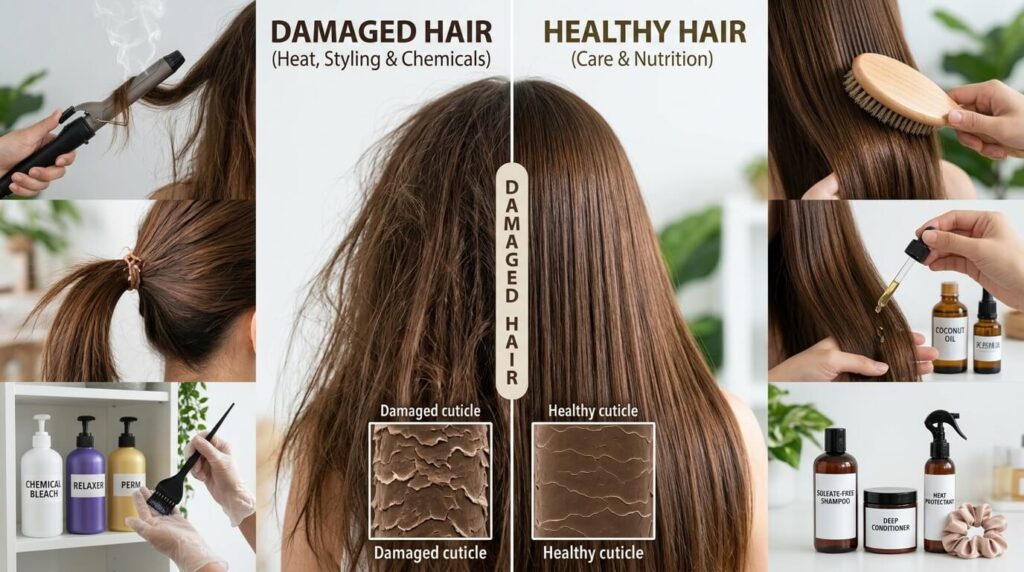
Tight hairstyles (ponytails, buns, braids), frequent heat styling, and harsh chemical treatments can physically damage the hair shaft or pull at the follicle, leading to a type of hair loss called traction alopecia. This cause is fully within your control to prevent.
Natural Ways to Prevent Hair Fall: The Core Remedies
Scalp Massage for Circulation
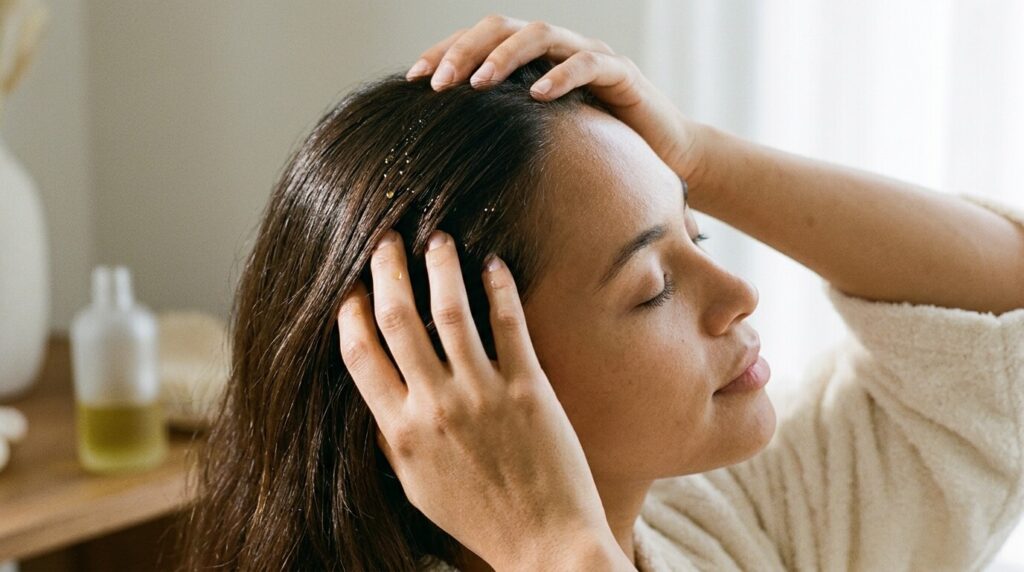
Massaging the scalp for a few minutes daily is one of the simplest natural ways to prevent hair fall, and it has more research behind it than many people assume. Regular scalp massage appears to stimulate blood flow and may mechanically stretch hair follicle cells in a way that supports thicker hair over time. It’s low-risk, free, and pairs well with oil treatments below.
Actionable takeaway: Spend 4–10 minutes massaging the scalp with your fingertips (not nails) in circular motions, ideally daily, for at least three months before judging results.
Natural Oils (Rosemary, Castor, Coconut, Peppermint)
Oils are the most talked-about natural hair-fall remedies, but the evidence varies significantly by oil:
- Rosemary oil has shown promise in small trials as comparable to topical minoxidil for stimulating regrowth, likely by improving scalp circulation.
- Castor oil lacks direct evidence for regrowth but has anti-inflammatory and moisturizing properties that support a healthier scalp environment.
- Coconut oil doesn’t stimulate new growth but helps reduce protein loss from the hair shaft, which can mean less breakage.
- Peppermint oil has shown hair-growth effects in animal studies, though human data is still limited.
Actionable takeaway: Dilute essential oils (like rosemary or peppermint) in a carrier oil before applying, and patch-test first to avoid irritation.
Caffeine-Infused Treatments
Topical caffeine — in shampoos or scalp serums — is one of the better-supported natural ingredients for hair fall. It appears to stimulate hair follicles and may extend the hair’s active growth phase. Some research even suggests combining caffeine with minoxidil outperforms minoxidil alone, which makes caffeine shampoo a reasonable low-risk addition to an existing routine.
Diet and Nutrition for Hair Health
Since hair is largely protein, what you eat matters more than most realize:
- Aim for adequate daily protein intake (lean meats, eggs, legumes, dairy).
- Consider a Mediterranean-style diet rich in vegetables, healthy fats, and whole grains, which has been associated with a lower risk of pattern hair loss.
- Avoid crash or very low-calorie diets, which can trigger temporary shedding.
Actionable takeaway: If you’ve recently lost significant weight quickly or follow a restrictive diet, that alone could explain increased shedding — a registered dietitian or doctor can help check for deficiencies.
Vitamins and Minerals Worth Checking
Supplementing blindly isn’t the answer — most healthy, well-nourished people won’t see benefits from extra vitamins. But if blood work shows a deficiency, correcting it can help. The nutrients most associated with hair health include iron, zinc, vitamin D, and biotin. Going significantly over recommended daily amounts of any of these can cause its own problems, so testing before supplementing is the safer path.
Stress Management Techniques
Because stress-related shedding (telogen effluvium) is one of the most common hair-fall triggers, managing stress is itself a legitimate natural hair-fall remedy. Practices like regular exercise, adequate sleep, and mindfulness or breathing exercises won’t regrow hair directly, but they can reduce the cortisol-driven shedding cycle that stress causes.
Gentle Hair and Scalp Care Habits
Small daily habits add up:
- Avoid tight hairstyles that pull on the hairline.
- Use the lowest effective heat setting when blow-drying, or air-dry when possible.
- Switch to a silk or satin pillowcase to reduce friction-related breakage.
- Avoid brushing or styling hair while it’s very wet, when it’s most vulnerable to breakage.
Comparing Natural Remedies: Evidence, Cost, and Time to Results
| Remedy | Evidence Strength | Typical Cost | Realistic Time to Notice a Difference |
|---|---|---|---|
| Scalp massage | Moderate | Free | 3–6 months |
| Rosemary oil | Moderate | Low | 4–6 months |
| Caffeine shampoo/serum | Moderate-good | Low–medium | 3–6 months |
| Coconut/castor oil | Low (for growth), moderate (for breakage) | Low | Ongoing, mainly for hair strength |
| Dietary changes | Moderate (if deficient) | Varies | 3–6 months |
| Targeted supplementation | Moderate (only if deficient) | Low–medium | 3–6 months |
| Stress management | Indirect but meaningful | Free–low | Varies with cause |
Building a Realistic Natural Hair-Care Routine
A common reason natural remedies “don’t work” is inconsistency. A simple framework:
- Daily: Gentle scalp massage (can be combined with oil application), avoid tight hairstyles, eat a protein-containing meal.
- 2–3x per week: Apply diluted rosemary or peppermint oil, use a caffeine-infused shampoo.
- Weekly: Deep-condition with coconut oil to reduce breakage, evaluate stress levels and sleep quality.
- Every 3–6 months: Reassess — take photos to track density, and if there’s no improvement, consider bloodwork or a dermatology visit.
Natural Remedies vs. Medical Treatments: How to Decide
Natural approaches work best for lifestyle-driven or mild shedding, or as a complement to medical treatment. They’re generally not enough on their own for genetic pattern hair loss, where FDA-approved options like topical minoxidil or prescription finasteride have substantially stronger evidence. Many dermatologists recommend combining a natural routine (diet, scalp care, stress management) with a medical treatment rather than treating them as either/or — addressing lifestyle factors can support whatever medical treatment you choose.

When to See a Dermatologist
Natural remedies are reasonably low-risk, but certain signs call for a professional opinion rather than more home treatments:
- Sudden or patchy bald spots
- Scalp redness, itching, or pain
- Hair loss accompanied by fatigue, weight changes, or other symptoms
- No improvement after 6 months of a consistent natural routine
Frequently Asked Questions
Can hair fall be stopped naturally? For some causes — particularly stress-related shedding, nutrient deficiencies, and hairstyling damage — natural approaches can meaningfully reduce hair fall. For genetic pattern hair loss, natural remedies can slow or support but rarely stop it entirely without medical treatment.
What is the fastest natural way to stop hair fall? There’s no overnight fix, but caffeine-based treatments and scalp massage tend to show early signs of improvement (less shedding, not necessarily new growth) within a few months for some people.
Which oil is best for hair fall control? Rosemary oil currently has the strongest research behind it among natural oils, though individual results vary and a dermatologist can help tailor the choice to your specific cause of hair loss.
Does diet really affect hair loss? Yes, particularly if you have a nutrient deficiency or follow a very restrictive diet. For people who already eat a balanced diet, additional supplementation typically won’t add much benefit.
How long do natural remedies take to show results? Most natural remedies need 3–6 months of consistent use before you can fairly judge whether they’re working, since hair growth cycles are slow.
When should I see a doctor about hair loss? If you notice sudden or patchy bald spots, scalp symptoms like pain or redness, or no improvement after months of consistent natural care, it’s worth getting a professional evaluation.

Conclusion
Natural ways to prevent hair fall work best when they’re matched to the actual cause — stress, diet, styling habits, or genetics — and applied consistently over months, not days. Start with the basics (gentle scalp care, a balanced diet, and stress management), layer in oils or caffeine treatments if you want to go further, and don’t hesitate to bring in a dermatologist if you’re not seeing results after a reasonable trial period.