
You’re not alone in asking. Diarrhea in early pregnancy is more common than most pregnancy books let on, and the conversation around it tends to be drowned out by all the talk about morning sickness and fatigue. This guide covers everything you genuinely need to know: what causes it, whether it can be a sign of pregnancy, how to manage it safely, and when it’s time to pick up the phone and call your OB.
- Is Diarrhea Normal in Early Pregnancy?
- Can Early Pregnancy Actually Cause Diarrhea?
- Hormonal Changes: The Main Driver
- Dietary Changes and Prenatal Vitamins
- Food Aversions and Heightened Sensitivities
- Stress and Anxiety
- Infections and Food Poisoning
- Is Diarrhea a Sign of Early Pregnancy or Implantation?
- When Does Diarrhea Typically Start and How Long Does It Last?
- How to Safely Manage Diarrhea During Early Pregnancy
- Stay Hydrated — This is Priority One
- The BRAT Diet (and Its Limitations)
- Foods to Avoid While Dealing with Diarrhea
- Probiotics
- What About Anti-Diarrheal Medications?
- What Competitors Miss: The Gut Microbiome in Early Pregnancy
- When Diarrhea in Early Pregnancy Is a Warning Sign
- Diarrhea vs. Constipation in Early Pregnancy: Why Both Happen
- Practical Daily Tips to Reduce Diarrhea in Early Pregnancy
- Diarrhea and Miscarriage Risk: Setting the Record Straight
- Conclusion: What You Actually Need to Know
- Frequently Asked Questions (FAQ)
Is Diarrhea Normal in Early Pregnancy?
Short answer: yes, for many women it is.
Diarrhea isn’t the most talked-about symptom of early pregnancy, but it’s a legitimate one. Your body undergoes a dramatic hormonal shift from the moment of conception, and your digestive tract is one of the first systems to feel it. Loose stools or more frequent bowel movements in the first trimester are well within the range of normal pregnancy experiences.
That said, “normal” doesn’t mean universal. Some women experience diarrhea; others deal with the opposite — constipation. Still others notice their digestion alternating between the two. Every body responds to pregnancy hormones differently, and there’s a wide spectrum of what counts as a typical first-trimester digestive experience.
What matters most is understanding why it happens, recognizing when it’s crossing into concerning territory, and knowing what you can safely do about it.
Can Early Pregnancy Actually Cause Diarrhea?
Yes — and there are several distinct reasons why.
Hormonal Changes: The Main Driver
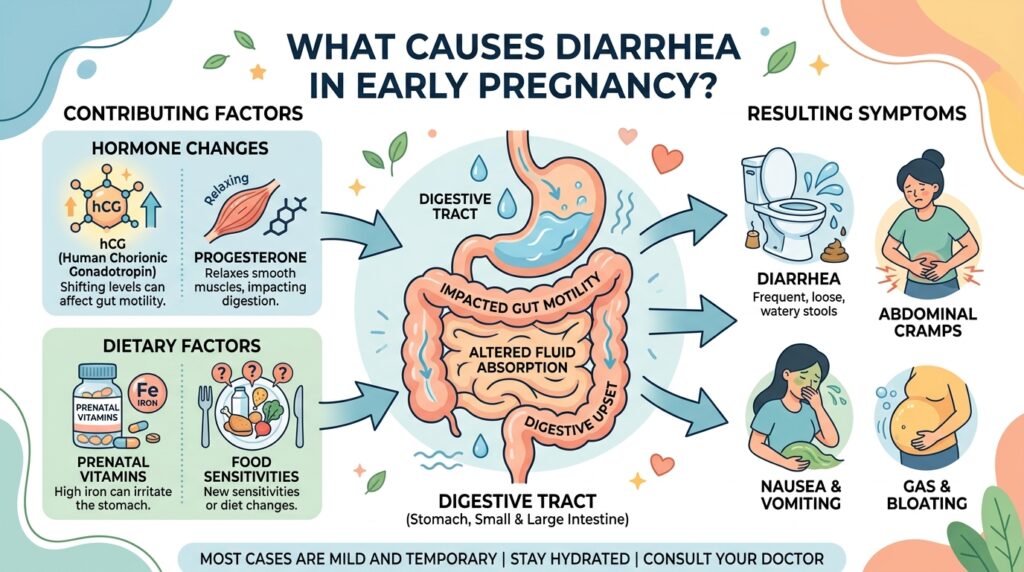
Within days of conception, your body begins producing human chorionic gonadotropin (hCG), the hormone detected by pregnancy tests. Shortly after, progesterone rises sharply. Progesterone is essential for maintaining pregnancy — it relaxes the smooth muscle of the uterus to prevent contractions — but it also relaxes smooth muscle throughout the entire body, including the gastrointestinal tract.
For most women, this relaxation slows digestion, leading to constipation. But for others, particularly those whose gut is already more reactive, the hormonal fluctuation can tip things in the opposite direction, causing loose or frequent stools. Prostaglandins — hormone-like compounds that rise in early pregnancy — can also stimulate intestinal contractions, contributing to diarrhea.
Dietary Changes and Prenatal Vitamins
When you find out you’re pregnant, you probably changed what you eat almost immediately. More fruits, more vegetables, more fiber-rich foods. These changes are all healthy, but a sudden increase in fiber can irritate a digestive system that wasn’t used to it, causing loose stools for a week or two while your gut adjusts.
Prenatal vitamins can also play a role. While iron in prenatal vitamins is more commonly associated with constipation, some formulations — especially those with added magnesium or omega-3 fatty acids — can have a loosening effect on the bowels. If your diarrhea started shortly after beginning prenatal supplements, it’s worth noting the timing.
Food Aversions and Heightened Sensitivities
Early pregnancy often brings an exaggerated sensitivity to foods that didn’t bother you before. Dairy, fatty foods, or even certain spices that your gut previously tolerated can suddenly trigger a rapid response. This isn’t an allergy — it’s your digestive system becoming hyperreactive, likely due to hormonal changes affecting gut motility and sensitivity.
Stress and Anxiety
Finding out you’re pregnant, especially if the pregnancy is unexpected or if you’ve had a previous loss, can generate significant emotional stress. The gut-brain axis is real: anxiety activates the nervous system in ways that directly speed up gut transit time, resulting in looser, more frequent stools. If your diarrhea is worse on days when anxiety is higher, this connection may be relevant for you.
Infections and Food Poisoning
This one deserves a separate mention because it’s easy to assume every GI symptom during pregnancy is pregnancy-related — and that can lead to delayed treatment. Gastroenteritis (stomach flu), bacterial food poisoning (from undercooked meat, raw shellfish, or improperly stored food), and parasitic infections can all cause diarrhea. These are especially important to address during pregnancy because dehydration and certain pathogens can pose real risks to the developing baby.
If your diarrhea came on very suddenly, is accompanied by fever or vomiting, or you suspect a particular food triggered it, consider infection as a potential cause rather than assuming it’s a pregnancy symptom.
Is Diarrhea a Sign of Early Pregnancy or Implantation?
This question comes up a lot, and it deserves a careful, honest answer.
Diarrhea is not considered a reliable or diagnostic sign of early pregnancy in the way that a missed period or a positive pregnancy test is. There’s no direct biological mechanism that specifically causes diarrhea at the moment of implantation (which typically occurs 6–12 days after ovulation).
That said, some women do report looser stools or GI changes in very early pregnancy — even before a missed period — as part of the broader hormonal shift. These symptoms overlap heavily with PMS, which can also cause digestive changes due to prostaglandin activity in the luteal phase of the cycle.When can you find out gender of baby?
In other words: if you’re experiencing diarrhea and wondering if it means you’re pregnant, it might be an early pregnancy symptom for you — but it could just as easily be PMS, a dietary trigger, or a mild infection. The only reliable way to confirm early pregnancy is a home pregnancy test (most accurate from the day of a missed period) or a blood hCG test through your doctor.
When Does Diarrhea Typically Start and How Long Does It Last?
Most women who experience diarrhea as a pregnancy symptom notice it in the first trimester, particularly in weeks 4–10. This corresponds to the period of the most dramatic hormonal change and often coincides with nausea and other early pregnancy symptoms.
For many women, it resolves on its own by weeks 12–14 as the body adapts to its new hormonal baseline. For others, it may come and go throughout the first trimester depending on diet, stress levels, and other factors.
Diarrhea that persists well into the second trimester should be discussed with your healthcare provider, as it’s less commonly a straightforward pregnancy symptom at that stage.
How to Safely Manage Diarrhea During Early Pregnancy
Managing diarrhea while pregnant requires more care than when you’re not pregnant, because some common remedies aren’t appropriate during the first trimester. Here’s what’s safe and what to avoid.
Stay Hydrated — This is Priority One
Dehydration is the primary risk of diarrhea during pregnancy. Fluids are essential not just for you, but for maintaining adequate amniotic fluid and supporting fetal development. When you’re losing fluids through diarrhea, you need to replace them actively.
Drink small, frequent amounts of:
- Water
- Clear broths
- Oral rehydration solutions (like Pedialyte)
- Diluted fruit juice or coconut water
Avoid drinks high in sugar, caffeine, or artificial sweeteners — these can actually worsen diarrhea. Sports drinks like Gatorade can help if they’re the only option, but they’re high in sugar; diluting them with water is a good middle-ground.
Signs of dehydration to watch for: dark urine, infrequent urination, dry mouth, dizziness, or feeling faint. If any of these appear alongside diarrhea, contact your OB or midwife promptly.
The BRAT Diet (and Its Limitations)
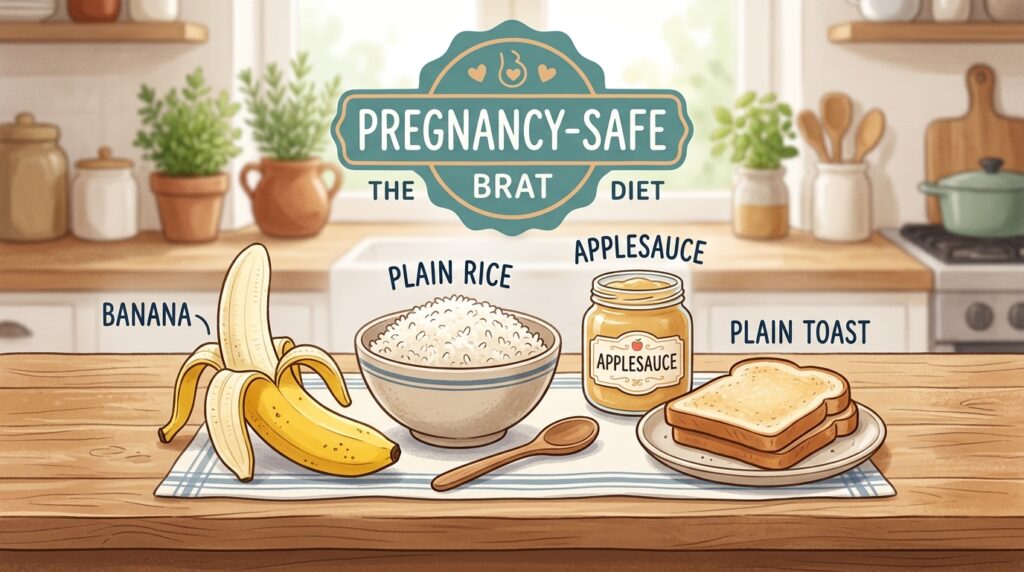
The BRAT diet — Bananas, Rice, Applesauce, Toast — has long been recommended for diarrhea because these foods are bland, low in fiber, and easy on the gut. They can absolutely help slow things down and give your digestive system a break.
However, the BRAT diet is nutritionally limited and shouldn’t be your only food source for more than a day or two. In early pregnancy, when your baby needs a consistent supply of folate, iron, and other nutrients, you want to return to a more varied, nourishing diet as soon as your gut will allow it.
Other gut-friendly options to add once things settle: plain boiled potatoes, plain crackers, cooked carrots, and steamed white rice with a small amount of chicken.
Foods to Avoid While Dealing with Diarrhea
Temporarily remove these from your diet until symptoms resolve:
- Dairy products (particularly milk and ice cream)
- Fried or greasy foods
- High-fiber foods like raw vegetables, whole grains, and legumes
- Spicy foods
- Caffeine
- Artificial sweeteners (sorbitol, mannitol, xylitol — found in “sugar-free” products)
Probiotics
There is emerging evidence that probiotic supplementation can help restore gut flora balance during episodes of diarrhea. Probiotics containing Lactobacillus rhamnosus GG have a reasonable safety profile in pregnancy and have been studied in this context. However, before starting any new supplement during pregnancy — even one considered generally safe — discuss it with your healthcare provider first.
What About Anti-Diarrheal Medications?
This is where many pregnant women get stuck, unsure what’s safe to take. Here’s the current guidance:
Loperamide (Imodium): Use during the first trimester is generally avoided due to limited data. Some studies have raised concerns about a potential (though small) association with certain birth defects when used in early pregnancy. After the first trimester, your doctor may consider it appropriate in specific situations. Do not take it without your provider’s explicit guidance during pregnancy.
Bismuth subsalicylate (Pepto-Bismol): Generally avoided throughout pregnancy. The salicylate component raises concerns, particularly in the third trimester, but first-trimester use is also not recommended.
Bottom line: For mild to moderate diarrhea in early pregnancy, dietary management and hydration are the safest first-line approaches. Only use medication if your doctor recommends it.
What Competitors Miss: The Gut Microbiome in Early Pregnancy
Most articles on this topic don’t mention what’s happening to your gut microbiome during early pregnancy — and it’s actually relevant.
Research published in the journal Cell Host & Microbe showed that the composition of the gut microbiome changes substantially and progressively across pregnancy trimesters. In early pregnancy, even before symptoms are obvious, shifts in microbial populations are already underway. These changes are driven partly by hormones and partly by immune system modulation (your immune system must partially suppress itself to accept the developing embryo).
This microbiome shift can alter gut transit time, increase intestinal sensitivity, and change how your gut responds to the same foods it previously handled without issue. It’s one reason why the digestive changes of early pregnancy can feel so surprising and unpredictable.
This also explains why some women find that foods they’ve eaten for years suddenly trigger diarrhea during early pregnancy — it’s not just psychological. The gut ecosystem itself has genuinely changed.
When Diarrhea in Early Pregnancy Is a Warning Sign
While most cases of diarrhea in early pregnancy are benign and self-limiting, there are situations that require prompt medical attention.
Contact your doctor or midwife if:
- Diarrhea lasts more than 48 hours without improvement
- You have more than 6–8 loose stools in a 24-hour period
- You see blood or mucus in your stool
- Diarrhea is accompanied by fever above 38°C (100.4°F)
- You experience significant abdominal cramping or pain beyond the normal discomfort
- You notice signs of dehydration: dark urine, dizziness, dry mouth, or not urinating for 6+ hours
- You suspect you’ve eaten something contaminated or been exposed to a stomach bug
Go to the emergency room or call emergency services if:
- You cannot keep any fluids down
- You faint or feel close to fainting
- Cramping is severe and feels different from ordinary digestive cramps
- You have any concern about the safety of your pregnancy
A note on severe cramping alongside diarrhea: it’s worth knowing that miscarriage can sometimes be accompanied by diarrhea and cramping together. This doesn’t mean diarrhea causes miscarriage — it doesn’t — but if you experience strong, rhythmic abdominal cramping along with diarrhea and any bleeding, seek medical care right away.
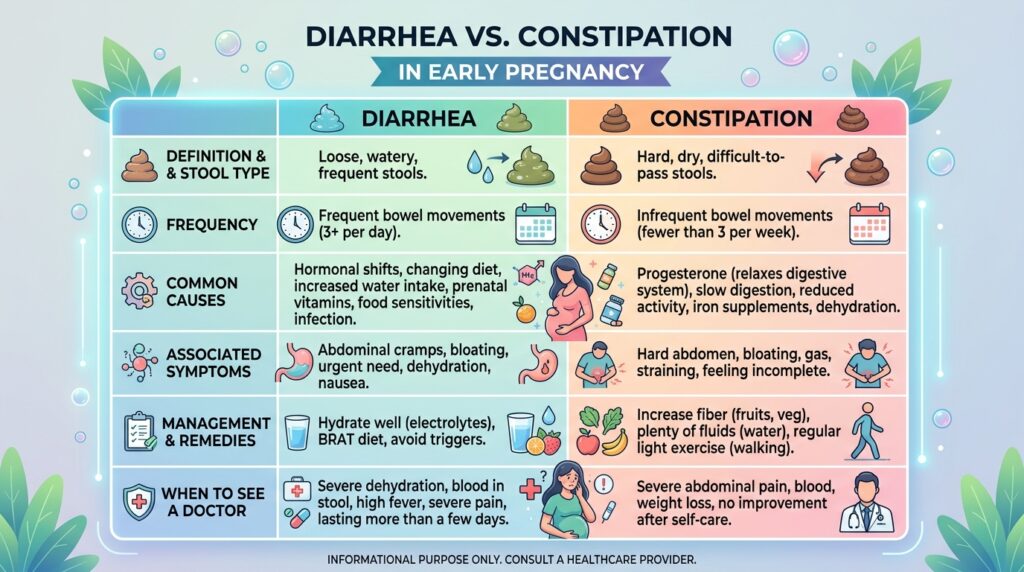
Diarrhea vs. Constipation in Early Pregnancy: Why Both Happen
It might seem contradictory that pregnancy causes both diarrhea in some women and constipation in others. Here’s why both make physiological sense.
Progesterone relaxes smooth muscle. In most women, this means the intestines move food through more slowly, leading to constipation. But in women with a more reactive gastrointestinal tract, or in situations where prostaglandins are more prominent, the effect is reversed — bowel movements become faster and looser.
Some women even alternate between the two, particularly in the first trimester, as their hormones fluctuate and their gut hasn’t yet settled into a predictable pattern. If this describes your experience, you’re not alone — and it doesn’t indicate anything is wrong.
Practical Daily Tips to Reduce Diarrhea in Early Pregnancy
- Eat smaller, more frequent meals rather than three large ones. This reduces the volume hitting your digestive tract at once and tends to be gentler overall.
- Introduce dietary changes gradually. If you’re adding more fruits and vegetables to your diet now that you’re pregnant, go slowly. Your gut needs time to adjust.
- Check your prenatal vitamin timing. Some women find that taking prenatal vitamins with food, or switching to a different brand, reduces GI side effects.
- Identify your personal trigger foods. Keep a loose food diary for a few days and note what you ate in the hours before symptoms flared. Patterns often emerge.
- Manage stress where possible. This is easier said than done in early pregnancy, but even brief mindfulness practices, gentle walks, and adequate sleep can reduce the nervous system stimulation that worsens gut reactivity.
- Stay physically active. Light to moderate exercise supports healthy gut motility. Walking for 20–30 minutes daily is generally well-tolerated in early pregnancy and can help regulate digestion.
Diarrhea and Miscarriage Risk: Setting the Record Straight
One of the most common fears that brings women to search this topic is whether diarrhea could cause a miscarriage. This concern deserves a clear, direct answer.
Diarrhea itself does not cause miscarriage. The uterus and the digestive tract are anatomically separate, and bowel activity — even significant diarrhea — does not trigger uterine contractions or endanger a developing embryo.
The two situations to be aware of:
- Severe dehydration, if left untreated, can stress the body in ways that are generally harmful during pregnancy. Staying hydrated is important.
- Certain infections that cause diarrhea (such as listeriosis or severe salmonella) can pose risks to pregnancy — not because of the diarrhea itself, but because of the infection’s systemic effects. This is another reason to seek medical care if you suspect a foodborne illness.
If diarrhea is your only symptom, there’s no reason to interpret it as a sign that something is wrong with your pregnancy.
Conclusion: What You Actually Need to Know
Diarrhea in early pregnancy is common, often related to the hormonal upheaval of the first trimester, and in most cases resolves on its own with time and basic dietary management. It can be an early pregnancy symptom for some women, though it’s not a reliable indicator of pregnancy on its own.
Focus on staying hydrated, eating gently, and monitoring for warning signs that warrant medical attention. Avoid over-the-counter anti-diarrheal medications without guidance from your healthcare provider, and don’t hesitate to reach out to your OB or midwife with questions — that’s exactly what they’re there for.
Your body is doing something remarkable. A few difficult weeks in the first trimester, uncomfortable as they are, are often just the price of admission to a healthy pregnancy.
Frequently Asked Questions (FAQ)
Can diarrhea be an early sign of pregnancy?
Yes, it can — though it’s not a reliable indicator on its own. Some women experience looser stools in early pregnancy due to rising hormones like hCG and progesterone. However, these same symptoms can occur with PMS or other digestive issues, so a pregnancy test is the only way to confirm.
Is diarrhea normal in the first trimester?
Yes, it is for many women. Hormonal changes, dietary shifts, prenatal vitamins, and increased gut sensitivity can all contribute to diarrhea in weeks 4–12 of pregnancy. It usually improves as the body adjusts.
Could diarrhea be caused by early pregnancy even before a missed period?
Potentially, yes. Some women notice GI changes very early in pregnancy, even before a missed period, due to rapidly rising hormone levels. However, these early symptoms are essentially indistinguishable from PMS without a pregnancy test.
How long does diarrhea last in early pregnancy?
For most women, it’s intermittent and resolves by the end of the first trimester (around weeks 12–14). Persistent diarrhea lasting more than 48 hours, or diarrhea into the second trimester, should be discussed with your doctor.
What can I safely take for diarrhea while pregnant?
In early pregnancy, dietary management (bland foods, adequate hydration, avoiding triggers) is the safest approach. Oral rehydration solutions can help replace lost fluids. Avoid loperamide (Imodium) and bismuth subsalicylate (Pepto-Bismol) without explicit guidance from your healthcare provider.
Does diarrhea during early pregnancy mean something is wrong?
Not usually. Most cases are a normal part of the first-trimester digestive experience. However, seek medical attention if diarrhea is accompanied by fever, blood in the stool, severe cramping, signs of dehydration, or lasts more than 48 hours.
Can diarrhea cause a miscarriage?
No. Diarrhea itself does not cause miscarriage. Severe, untreated dehydration or certain underlying infections could pose risks, but these scenarios require attention regardless of whether pregnancy is involved. If you’re concerned, contacting your doctor is always the right call.
Is diarrhea after a missed period a sign of pregnancy?
It can be, particularly when accompanied by other early pregnancy symptoms like breast tenderness, fatigue, or nausea. But the most reliable confirmation is a pregnancy test.
Why do I have diarrhea instead of constipation in early pregnancy?
Both are common first-trimester experiences. Progesterone relaxes smooth muscle throughout the body; in some women this slows digestion (constipation), while in others — particularly those with a more reactive gut or higher prostaglandin activity — it speeds things up (diarrhea). Both responses are physiologically normal.