Pregnancy already comes with fatigue, frequent bathroom trips, and a thirst that never quite goes away — which is exactly why early signs of gestational diabetes are so easy to miss. Gestational diabetes mellitus (GDM) is high blood sugar that develops during pregnancy, and in most cases, it produces no noticeable symptoms at all. That’s why routine screening between 24 and 28 weeks is standard prenatal care in the United States.
Still, a small number of women do notice subtle changes before they’re ever tested — and knowing what those changes look like, along with your personal risk factors, can help you bring up concerns with your provider sooner rather than later. This guide walks through every early sign worth knowing, how gestational diabetes is actually diagnosed, who’s most at risk, and what happens next if you test positive.
What Is Gestational Diabetes?
Gestational diabetes is a type of diabetes first diagnosed during pregnancy in someone who didn’t have diabetes before becoming pregnant. It happens because pregnancy hormones — particularly those produced by the placenta — make it harder for the body’s cells to respond to insulin, a condition called insulin resistance. When the pancreas can’t produce enough extra insulin to compensate, blood sugar rises.
It’s distinct from:
- Type 1 diabetes, an autoimmune condition that usually begins in childhood or young adulthood and existed before pregnancy.
- Type 2 diabetes, a chronic condition involving insulin resistance that also exists outside of pregnancy.
- Pregestational diabetes, the term for type 1 or type 2 diabetes diagnosed before conception, which carries different risks and management than GDM diagnosed during pregnancy.
Gestational diabetes affects roughly 6 to 9 percent of pregnancies in the U.S., though estimates vary by population and diagnostic criteria used. For most people, blood sugar returns to normal soon after delivery, but the condition raises long-term risk for type 2 diabetes later in life.
Why Gestational Diabetes Often Has No Symptoms
Most pregnant women with gestational diabetes feel completely normal. Blood sugar elevations are often modest, and the body adapts gradually over weeks, so there’s rarely a single, identifiable moment where something feels clearly “off.” This is the central reason universal screening exists: relying on symptoms alone would miss the majority of cases. One analysis of commonly missed presentations found that up to a quarter of gestational diabetes cases go unnoticed by symptoms until the standard glucose test, underscoring why screening — not symptom-watching — is the primary diagnostic tool.
That said, when signs do appear, they tend to fall into a recognizable pattern tied to how high blood sugar affects the body.
Early Signs and Symptoms of Gestational Diabetes
1. Increased Thirst (Polydipsia)
When blood sugar rises, the kidneys pull extra fluid from tissues to help flush out excess glucose through urine, leaving you dehydrated and thirstier than usual. Mild thirst is common in pregnancy, but persistent thirst that isn’t relieved by drinking water is worth mentioning to your provider.
2. Frequent Urination (Polyuria)
Frequent urination is one of the most universal pregnancy symptoms because of the growing uterus pressing on the bladder. With gestational diabetes, though, the excess glucose excreted in urine draws additional fluid with it, which can make urination noticeably more frequent — especially at night.
3. Unusual Fatigue
Pregnancy fatigue is expected, but gestational diabetes can compound it. When cells can’t use glucose efficiently for energy because of insulin resistance, the result is a tired, sluggish feeling that doesn’t improve with rest the way ordinary pregnancy tiredness does.
4. Dry Mouth
A persistently dry mouth, even after drinking fluids, often goes hand-in-hand with increased thirst and is driven by the same fluid-shifting process caused by elevated glucose.
5. Blurred Vision
High blood sugar can pull fluid into and out of the lens of the eye, temporarily changing its shape and affecting focus. Blurred vision in pregnancy has several possible causes, but when paired with thirst or fatigue, it’s a reasonable symptom to raise with your care team.

6. Increased Hunger (Polyphagia)
Because insulin resistance prevents glucose from being used effectively by cells, the body may signal persistent hunger even after eating, since cells are effectively being “starved” of usable energy despite normal or high blood sugar.
7. Unexplained Weight Changes
Unexpected weight loss despite normal or increased eating, or weight gain that’s faster than expected for your stage of pregnancy, can both be associated with blood sugar irregularities and are worth flagging to your provider.
8. Recurrent Infections
High blood sugar creates a favorable environment for certain bacteria and yeast, so women with gestational diabetes may notice more frequent urinary tract infections, yeast infections, or skin infections than usual.
9. Slow-Healing Cuts or Skin Irritation
Elevated glucose can impair circulation and immune response at a small scale, which may show up as cuts, scrapes, or skin irritation that take longer than usual to heal.
10. Fatigue Paired With Irritability
Some women report a combination of tiredness and irritability that feels different from typical pregnancy mood shifts — though this symptom is nonspecific and overlaps with many other causes, including normal hormonal change.
11. Snoring or New Sleep Apnea Symptoms
Emerging research links gestational diabetes with an increased rate of sleep-disordered breathing during pregnancy, possibly related to weight gain and hormonal shifts; new or worsening snoring alongside other symptoms is a less commonly discussed but relevant sign.
12. No Symptoms at All
It’s worth repeating: the most common “sign” of gestational diabetes is the complete absence of symptoms. This is precisely why screening, not symptom-spotting, catches the vast majority of cases.
Quick takeaway: If you notice two or more of these changes — especially thirst, fatigue, and frequent urination together — within the same week, it’s reasonable to contact your prenatal provider rather than wait for your scheduled screening.
Risk Factors for Gestational Diabetes
Because symptoms are unreliable, risk factors matter more for early detection. According to major health organizations, risk is higher if you have:
- A body mass index (BMI) of 30 or above before pregnancy
- A personal history of gestational diabetes in a previous pregnancy
- A parent or sibling with type 2 diabetes
- Prediabetes or a history of impaired glucose tolerance
- Polycystic ovary syndrome (PCOS)
- Delivered a baby weighing more than 9 pounds (4.1 kg) in a prior pregnancy
- Age over 25, with risk increasing further after 35
- Limited physical activity before pregnancy
- Membership in certain higher-risk racial and ethnic groups, including Black, Hispanic, American Indian, Asian American, and Pacific Islander populations
Having one or more of these risk factors doesn’t mean you will develop gestational diabetes, but it may mean your provider recommends earlier or more frequent screening.
Symptoms vs. Risk Factors vs. Diagnostic Testing
| Category | What It Tells You | Reliability for Catching GDM | Example |
|---|---|---|---|
| Symptoms | Physical signs you may notice | Low — most cases have none | Increased thirst, fatigue, blurred vision |
| Risk factors | Statistical likelihood based on health history | Moderate — helps decide when to test, not whether you have it | BMI ≥30, prior GDM, family history |
| Diagnostic testing | Actual blood glucose measurement | High — the only definitive method | Glucose challenge test, oral glucose tolerance test |
This distinction matters because relying on symptoms alone offers a false sense of security. Even women with zero symptoms and no obvious risk factors can be diagnosed through routine testing.

How Gestational Diabetes Is Diagnosed
In the United States, the American College of Obstetricians and Gynecologists (ACOG) recommends universal screening for gestational diabetes at 24 to 28 weeks of pregnancy, using one of two approaches:
The Two-Step Approach (most common in the U.S.)
- 1-hour glucose challenge test: You drink a 50-gram glucose solution, and blood sugar is measured one hour later. A result above roughly 130–140 mg/dL (the exact cutoff varies by practice) is considered a positive screen.
- 3-hour oral glucose tolerance test (OGTT): If the screening test is positive, a follow-up test uses a 100-gram glucose load with blood draws at fasting, 1, 2, and 3 hours. A diagnosis typically requires two or more of the four values to be above the threshold.
The One-Step Approach (used by some providers, per ADA guidance)
A single 2-hour, 75-gram OGTT is performed, with diagnosis based on any one elevated value at fasting, 1 hour, or 2 hours.
Early Screening for High-Risk Pregnancies
Women with significant risk factors — such as a BMI of 30 or higher plus an additional risk factor — may be screened for diabetes at their very first prenatal visit, with repeat screening at 24–28 weeks if the early test is negative.
Target Blood Sugar Levels Once Diagnosed
If you’re diagnosed with gestational diabetes, ACOG and the American Diabetes Association generally recommend aiming for:
- Fasting blood glucose below 95 mg/dL
- 1-hour post-meal glucose below 140 mg/dL
- 2-hour post-meal glucose below 120 mg/dL
These targets guide day-to-day management but should always be personalized with your care team.
Potential Complications If Gestational Diabetes Goes Untreated
Risks to the Baby
- Macrosomia (high birth weight), which raises the risk of birth injury and may require a C-section
- Preterm birth, sometimes due to medically necessary early delivery
- Respiratory distress syndrome in babies born early
- Neonatal hypoglycemia (low blood sugar shortly after birth)
- Higher long-term risk of obesity and type 2 diabetes in childhood or adulthood
- In severe, unmanaged cases, an increased risk of stillbirth
Risks to the Mother
- Preeclampsia and high blood pressure during pregnancy
- Higher likelihood of a C-section delivery
- Increased risk of developing gestational diabetes again in future pregnancies
- Significantly higher long-term risk of type 2 diabetes — studies estimate up to a 10-fold increased lifetime risk compared to women without a gestational diabetes history
- A documented increased risk of cardiovascular disease later in life, independent of whether type 2 diabetes ever develops
The encouraging news, echoed across major health organizations, is that gestational diabetes is highly manageable once identified, and treatment meaningfully reduces these risks.
How Gestational Diabetes Is Managed and Treated
Most cases are managed without medication, through:
- Nutrition therapy: Working with a dietitian or certified diabetes educator to balance carbohydrate intake across meals and snacks, emphasizing fiber-rich, lower-glycemic foods.
- Physical activity: Regular moderate exercise, such as walking or swimming, improves insulin sensitivity and helps regulate blood sugar.
- Blood sugar monitoring: Checking glucose levels at home, often four times a day (fasting and after meals), to track how well the management plan is working.
- Medication when needed: If nutrition and exercise aren’t enough to keep blood sugar in target range, insulin is the most commonly used medication during pregnancy; oral medications like metformin are used in some cases, depending on provider judgment and individual circumstances.
- More frequent prenatal visits: Especially in the third trimester, to monitor both maternal blood sugar and fetal growth and well-being.
What Happens After Delivery
For most people, blood sugar returns to a normal range shortly after the baby is born, since the hormonal shifts driving insulin resistance resolve once the placenta is delivered. However:
- A postpartum glucose test, typically at the 6-week postpartum visit, is recommended to confirm blood sugar has normalized.
- Long-term follow-up testing for type 2 diabetes is recommended periodically for years afterward, since the risk remains elevated indefinitely.
- Breastfeeding has been associated with a modestly lower risk of developing type 2 diabetes after a gestational diabetes pregnancy, alongside its other established benefits.

Can Gestational Diabetes Be Prevented?
There’s no guaranteed way to prevent gestational diabetes, but several evidence-based habits can lower risk, particularly when started before conception:
- Reaching a healthy weight before pregnancy, if applicable
- Eating a varied diet emphasizing vegetables, fruits, whole grains, and lean protein
- Getting at least 150 minutes of moderate physical activity per week, both before and during pregnancy
- Avoiding excessive weight gain during pregnancy, guided by your provider’s recommendation for your specific BMI category
- Discussing personal and family health history with a provider before trying to conceive, so risk can be assessed early
Common Mistakes and Misconceptions
- “I have no symptoms, so I don’t need the test.” Most gestational diabetes cases are symptom-free; skipping screening based on how you feel misses the vast majority of diagnoses.
- “Only overweight women get gestational diabetes.” While higher BMI is a major risk factor, gestational diabetes occurs in women across all body sizes.
- “It’s basically the same as having diabetes for life.” For most people, gestational diabetes resolves after delivery, though it does raise future risk and warrants ongoing monitoring.
- “If my blood sugar is fine on a home meter once, I’m cured.” Management requires consistent monitoring throughout pregnancy, not a single reassuring reading.
- “Diet alone always works.” Many cases are well-managed with nutrition and exercise, but insulin or other medication isn’t a failure — it’s a normal part of treatment for some pregnancies.
Frequently Asked Questions
What are the very first signs of gestational diabetes?
The earliest noticeable signs, when they occur at all, are typically increased thirst, more frequent urination, and unusual fatigue. Most women, however, have no early symptoms at all.
Can you have gestational diabetes with no symptoms?
Yes — this is actually the most common scenario. The majority of gestational diabetes cases are detected through routine screening, not symptoms.
When does gestational diabetes screening happen?
Standard screening occurs between 24 and 28 weeks of pregnancy. Women with significant risk factors may be screened earlier, often at the first prenatal visit.
Is gestational diabetes my fault?
No. While certain risk factors like BMI and family history increase likelihood, gestational diabetes results from complex hormonal changes during pregnancy that aren’t fully understood and aren’t something anyone causes intentionally.
Does gestational diabetes go away after birth?
For most women, blood sugar returns to normal shortly after delivery. A postpartum glucose test, usually around six weeks after birth, confirms this.
What foods should I avoid if I have gestational diabetes?
There’s no single forbidden food list; management typically focuses on balancing carbohydrate portions throughout the day rather than total elimination. A registered dietitian or certified diabetes educator can build a personalized plan.
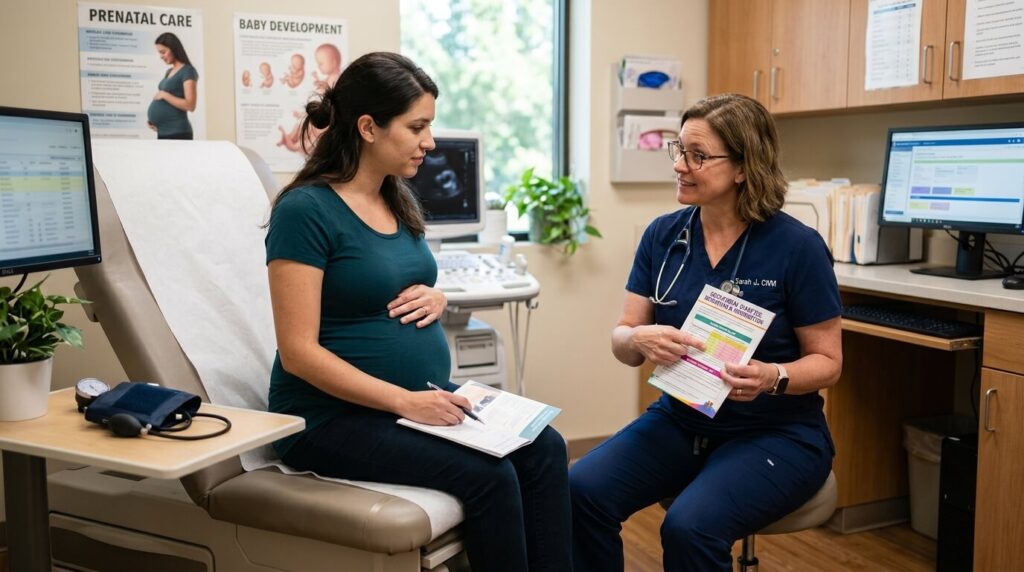
Can gestational diabetes harm my baby if untreated?
Yes, untreated gestational diabetes raises the risk of high birth weight, preterm birth, and neonatal low blood sugar, among other complications — which is why monitoring and treatment meaningfully reduce these risks.
Will I need insulin if I have gestational diabetes?
Not necessarily. Many cases are managed with diet and exercise alone. Insulin or another medication is added only if blood sugar targets aren’t met through lifestyle changes.
How accurate is the glucose challenge test?
The one-hour glucose challenge test is a screening tool, not a final diagnosis. A positive result means a follow-up diagnostic test (the 3-hour OGTT) is needed to confirm gestational diabetes.
Does gestational diabetes increase my risk of type 2 diabetes later?
Yes, significantly. Women with a history of gestational diabetes have a markedly higher lifetime risk of developing type 2 diabetes and are advised to have ongoing periodic glucose testing for years afterward.
Can I get gestational diabetes again in a future pregnancy?
Having had gestational diabetes once raises your risk of developing it again in future pregnancies, which is why providers typically screen earlier in subsequent pregnancies.
Is gestational diabetes more common in certain ethnic groups?
Yes, higher rates are observed among Black, Hispanic, American Indian, Asian American, and Pacific Islander populations, which is factored into risk-based early screening recommendations.
Does gestational diabetes affect vision permanently?
No — blurred vision related to gestational diabetes is typically temporary and related to fluid shifts in the eye’s lens; it generally resolves once blood sugar is managed and after pregnancy.
What’s the difference between the one-step and two-step screening methods?
The two-step method (used by most U.S. providers) starts with a 1-hour glucose challenge test, followed by a 3-hour test only if needed. The one-step method uses a single 2-hour test with different diagnostic cutoffs. Both are accepted approaches, and your provider will use whichever is standard at their practice.
Can stress or sleep problems cause symptoms similar to gestational diabetes?
Yes — fatigue, irritability, and even some sleep disturbances can result from normal pregnancy stress and poor sleep rather than blood sugar issues, which is exactly why testing, not symptoms alone, is used for diagnosis.